
Core Extrusion Production
Aluminum Alloy Extrusion Lines
Equipped with 6-12 units of 800T/1200T/1800T/2500T CNC extrusion presses; different tonnages correspond to different profile scenarios:

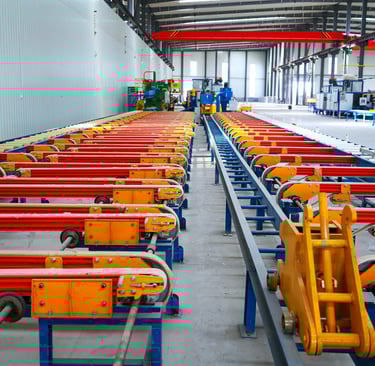

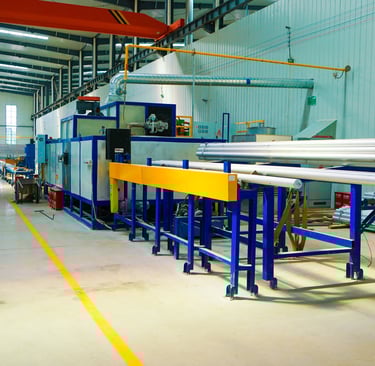
800T/1200T: Suitable for small decorative profiles and thin-wall precision profiles (e.g., door/window frames, electronic heat sinks);
1800T/2500T: Suitable for large industrial profiles and thick-wall load-bearing profiles (e.g., solar brackets, mechanical structural parts).
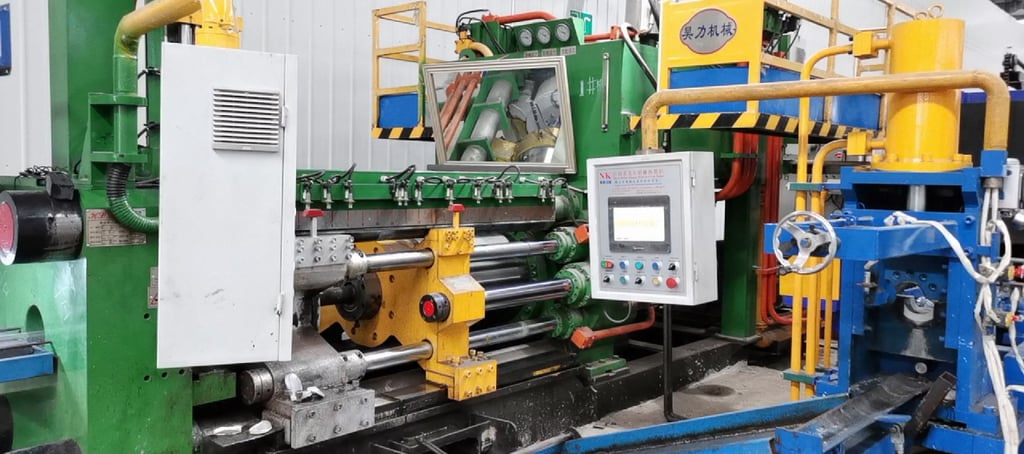
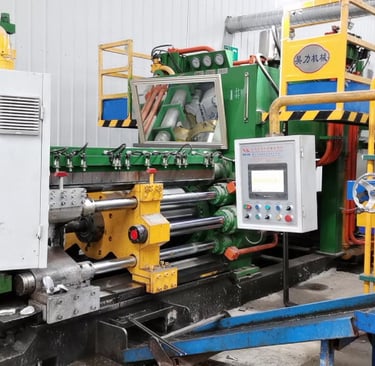
Isothermal extrusion process: Maintain stable temperature during extrusion via precise temperature control, ensuring uniform profile wall thickness with a tolerance of ≤±0.1mm—avoiding issues like installation misalignment or insufficient structural stability caused by wall thickness deviations;
Online quenching system: Complete T5/T6 heat treatment synchronously, increasing profile strength by over 30%—suitable for heavy-load, high-stress industrial scenarios.
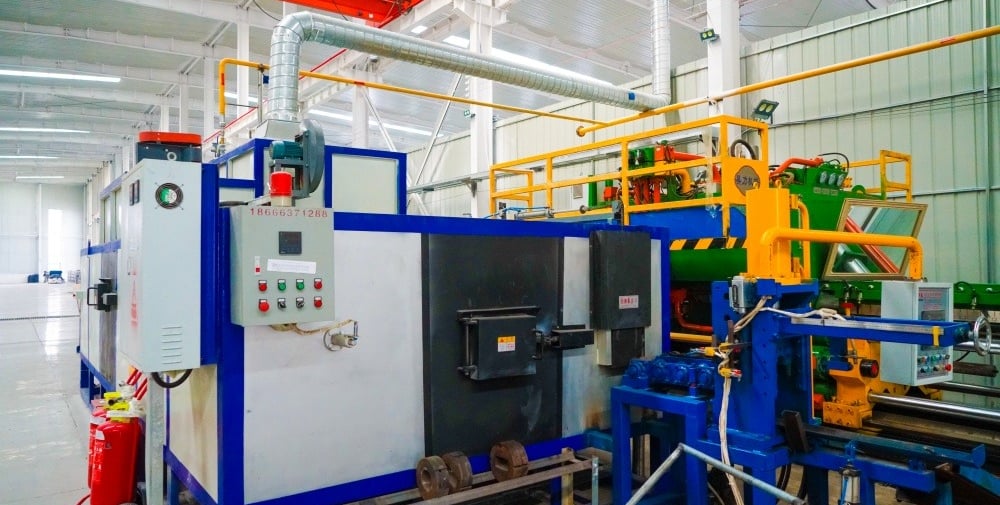
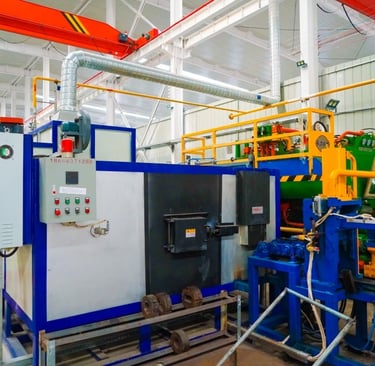
Equipped with a PLC control system, automatic billet feeder, and puller machine, enabling full-process automation from "billet feeding → extrusion → forming → pulling":
Reduce dimensional deviations and rhythm disorders caused by manual operations;
Production efficiency is 30% higher than traditional semi-automated lines, with daily output increasing by ~2 tons—effectively shortening order delivery cycles.
Extrusion Process Quality Control
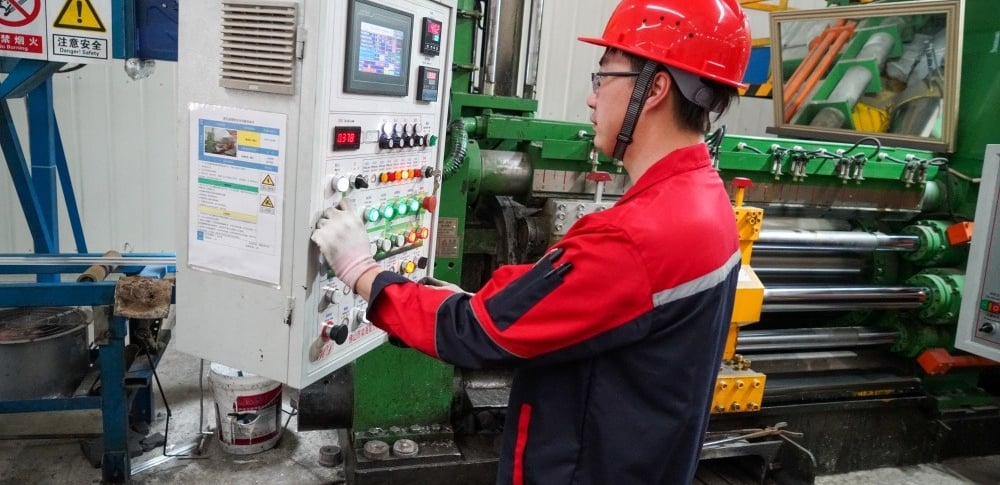
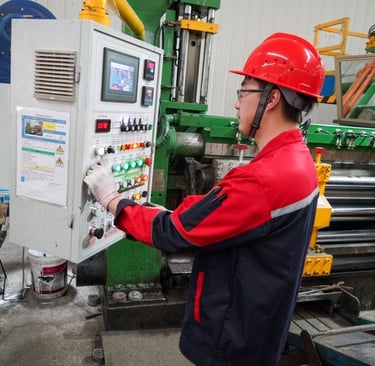
Via intelligent sensing and data acquisition systems, real-time monitor extrusion temperature (precisely maintained at 480-520℃) and extrusion speed—avoiding profile defects such as bubbles, surface scratches, and deformation caused by parameter fluctuations.
Combined with online visual inspection technology, real-time screen surface and dimensional quality of formed profiles, controlling the surface defect rate at ≤0.5%—greatly reducing time and cost losses from defective product rework and scrapping.
After extrusion, additional sampling dimensional inspections (matching customer-specified tolerance standards) and performance spot checks (e.g., hardness, tensile strength) are conducted—ensuring the delivered profiles fully meet precision and performance requirements.
Get in touch
Address
Wuqiang Industrial Zone,Hengshui,City,Hebei,China.
Follow Us




Cindy
Tel: +86 18849170174
cindy@sinohaike.com